





06.12.2022
Orthodontics in the second half of the 20th century
History of orthodontics, part 5 - Establishment as a specialist discipline
In the second half of the 20th century, orthodontics became fully established as a distinct medical specialty. In 1955, German universities began offering orthodontics as an exam subject. Consequently, an increasing number of specialists became involved in the advancements of orthodontics, which could now mature in detail across all areas. This also gave rise to important methods that we still use today in our orthodontic practice in Berlin. The further developments of fixed braces played a particularly significant role.
For the first time, brackets were attached directly to the teeth
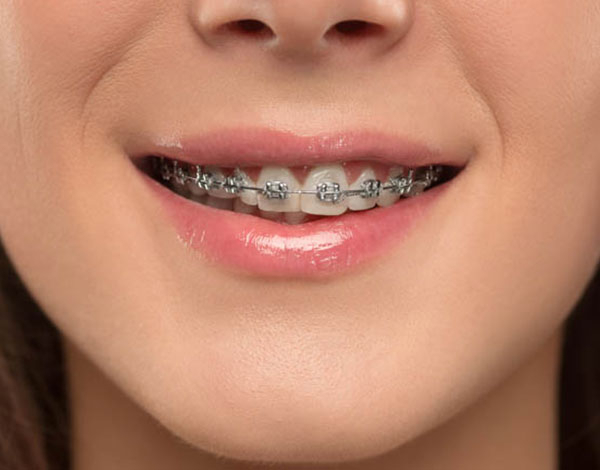
Starting in the 1950s, bonding techniques were developed and finally introduced in the 1970s to attach the brackets of fixed braces directly to the teeth. Until then, it was necessary to secure the brackets around the teeth using metal bands. Among other things, the bonding techniques made it easier to clean the teeth and offered aesthetic advantages. Braces also made progress in terms of comfort. In particular, the so-called self-ligating brackets developed by Dwight D. Damon made orthodontic treatment more comfortable starting in 1998. This principle of gentle force transmission to the tooth is also utilized by the modern brackets we use in various materials at our orthodontic practice in Berlin. Find out which developments in the 21st century have led to the current state of orthodontics in our sixth installment on the history of orthodontics.
Sources
Frank Möller: Geschichte der Kieferorthopädie. 2002 Boris Sonnenberg, Gernot Göz: Die Entwicklung der festsitzenden Apparatur. Teil 3 - Bracketentwicklung. zm Zahnärztliche Mitteilungen; 2002; 92(14):82-84 https://www.slideshare.net/IshfaqAhmad6/history-of-orthodontics-96964908 (abgerufen am 26.08.2022) https://www.zm-online.de/archiv/2016/11/gesellschaft/die-herausbildung-der-spezialdisziplinen/seite/5/ (abgerufen am 28.08.2022)